

Why kustik exists – and what that has to do with *me*
Good conversations are important to me. Not small talk, but genuine, attentive conversations. The kind where you understand each other—not just acoustically, but on a human level. But I am severely hard of hearing. Since birth.
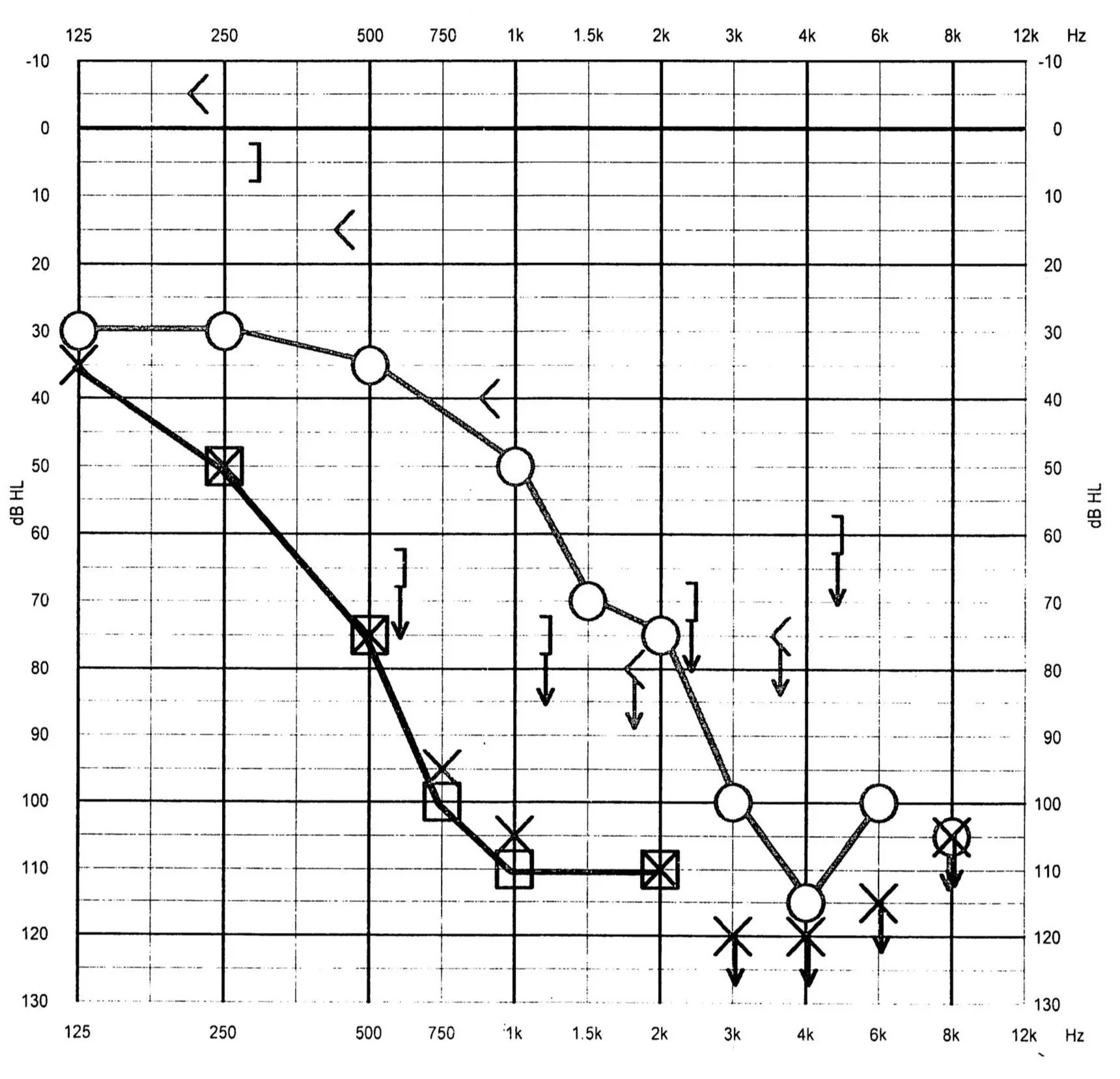
— My audiogram: 100% hearing loss on the left and 68% on the right
I have no idea what hearing means.
I don't know what stereo is. I can't tell which direction my children are calling me from. I don't recognize the voices of people calling me. I don't know how birds chirp in spring. I can only see theater. The same goes for radio. I only hear explicitly. Face-to-face. With my full attention and hearing aid. And even then, only with one ear and with over 60% loss.
Many are surprised when I say that I actually appreciate my hearing impairment. Because it's given me something I wouldn't trade: It's taught me to understand with my eyes and my mind. Because I can't trust my ears.
That's why I see what many people overlook. How someone moves. How they look, sit, stand. Calmness, tension, tiredness. I see how people react to spaces—often before they themselves realize it.
Good rooms have always been important to me.
I started my entrepreneurial career at the age of 16. At 21, I had my first office and employees. To date, I have founded nine companies— kustik the ninth. I have set up many workspaces. I know the questions: location, lighting, budget, lease term. And I know the disappointment when spaces work but don't have the desired effect.
Of course, acoustics has always been an issue for me. But a difficult one to solve. Until I was in Amsterdam in 2019. I wanted to evaluate new offices for our company, foryouandyourcustomers. I visited four buildings belonging to three tenants. All large, empty rooms—and all acoustically excellent. I was surprised. I saw that it was because of the ceiling. A fluffy, matte surface, quiet, unobtrusive—but effective.
That's how I got to know Acosorb and its founder, Caspar ter Bille. And I knew: Switzerland needs this solution.
That works.
In 2021, I found my new workspace—great location, great potential, terrible acoustics. With Acosorb's highly absorbent ceiling, it became a space where I could work, talk, and listen. And I could understand people. I could see how comfortable they felt. I knew it worked.
In 2023, I built my own home – naturally, also with a cellulose acoustic ceiling. And I looked for a provider in Switzerland. There wasn't one.
So, with two friends, I started the company kustik in partnership with Acosorb, with the following approach:
Spaces should facilitate conversations. Our company should too.
Spaces should be built for people first – not primarily for profit. Our company operates the same way.
kustik isn't just a business idea; it's a consequence.
Good spaces come about because the people involved want them. Good conversations do too.
Today, kustik is kustik days old and thriving. I would like to thank the team, the clients, and the many friends and colleagues on and off the construction site for their fantastic cooperation. Thank you also for the many good conversations—it's a pleasure!
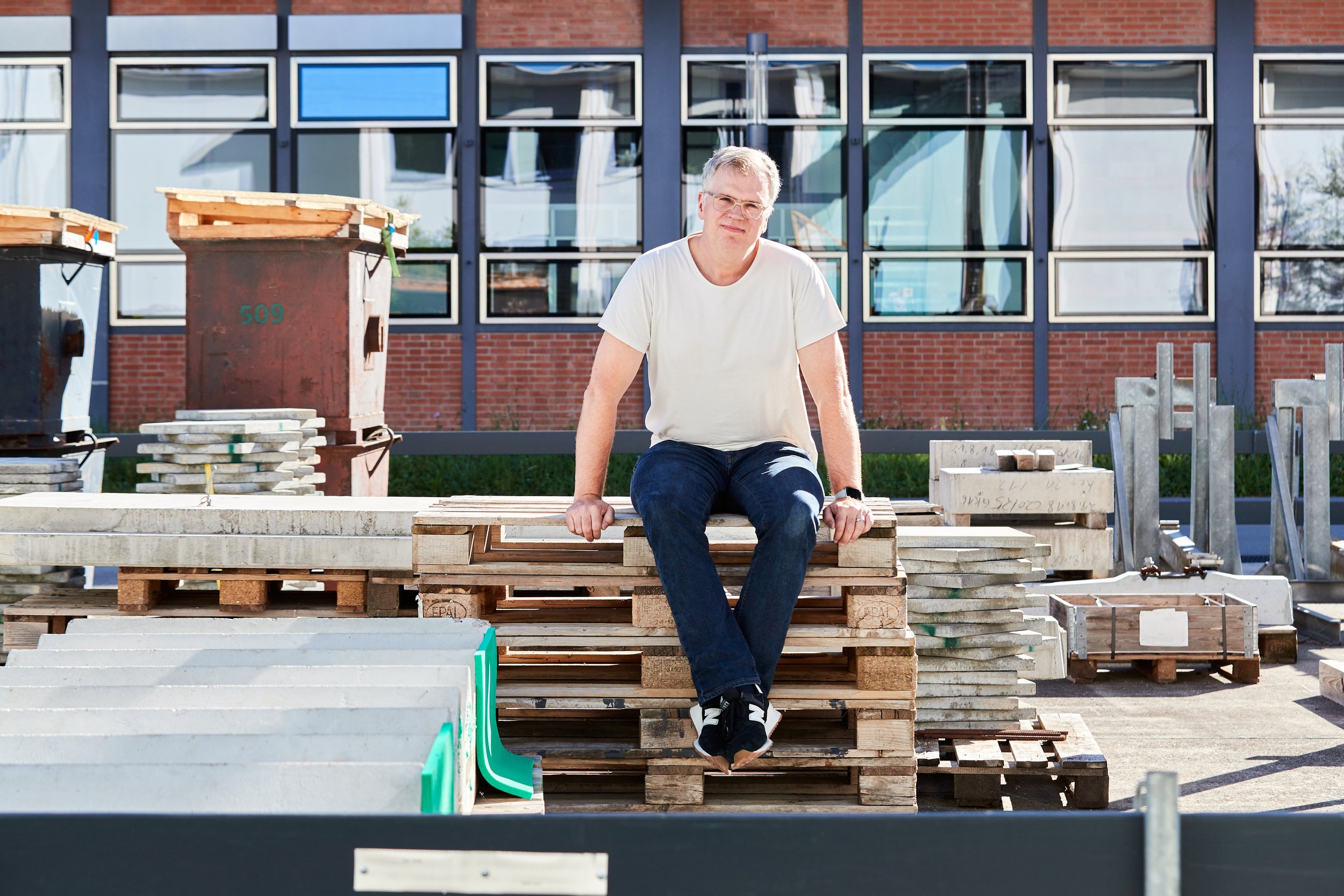
Jonathan Möller
As a driving force behind kustik author of this article, I am happy to respond to inquiries and feedback personally.
Want even more inspiration for good conversations?
How does your behavior change when you feel heard?
How do you show that you understand someone?
What does mutual respect mean to you?
These and 97 other questions are inspired by personalities from the fields of architecture, acoustics, sustainability, art, and philosophy and come from our card set "100 good questions for 200 good conversations."